The world can change without a single person changing their mind.
Sometimes nothing changes inside anyone. What changes is what everyone discovers about everyone else.

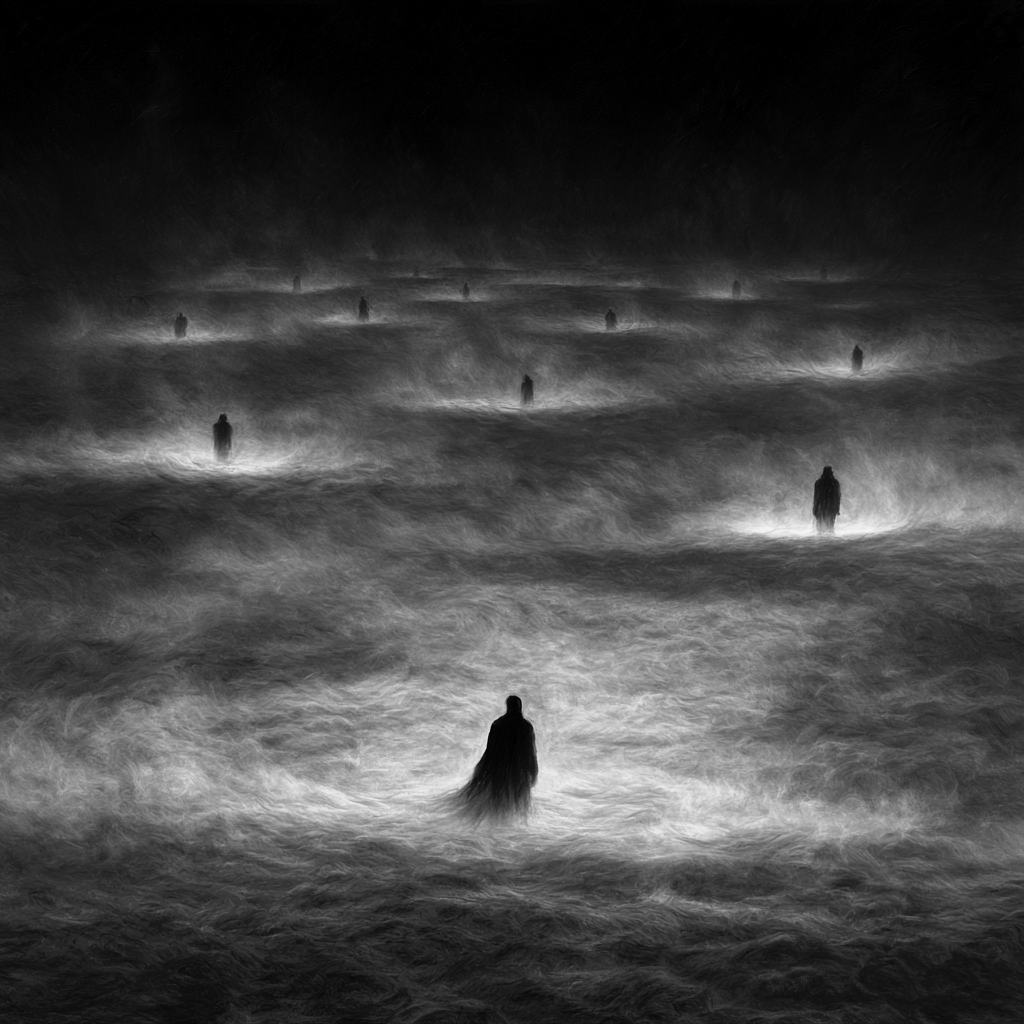
A society can contain two realities at once. In the private one, most people believe something. In the public one, most behave as though they believe its opposite. No individual deception is required. Each person may simply look outward, observe everyone else behaving the same way, and conclude that they are the exception. The result is a peculiar form of collective illusion: everyone can correctly understand themselves while incorrectly understanding almost everyone else. A world can therefore be maintained by beliefs that almost nobody holds.
This creates a kind of power that exists nowhere in particular. Members of a group can privately want a rule changed while each believes that most others want it preserved. Supporting the rule becomes rational even for those who oppose it, because public action depends not only on what a person believes, but on what they believe others believe. Their conformity then becomes new evidence for everyone watching. People do not merely respond to reality; their responses become part of the reality to which everyone else responds. A false perception can therefore generate the behavior that makes the perception appear true.
And then a single voice can be enough to break it. Yet the decisive event is not that another mind has been persuaded. It is that other people discover they were not alone. A second voice changes the meaning of the first. A third changes the meaning of the silence that came before them. Eventually, the same people who appeared to constitute a consensus can suddenly appear to have been trapped inside one. The information that transforms the system is not new information about the issue. It is new information about who already knew, believed, or wanted what.
This means that some realities are far more fragile than their visible stability suggests. A norm can survive thousands of acts of compliance while possessing almost no corresponding loyalty. An institution can appear unquestioned because everyone who questions it does so privately. An idea can look marginal not because few people hold it, but because its holders cannot see one another. In such systems, counting visible behavior can produce an extraordinarily accurate measurement of what people are doing while producing a profoundly inaccurate picture of why the world remains as it is.
Humanity often imagines transformation as the difficult work of changing enough minds. Sometimes that work is necessary. But there are moments when the deeper task is not creating agreement; it is making hidden agreement visible. Then transformation does not begin when people become different. It begins when they become mutually visible as they already are. A world can remain unchanged while millions privately inhabit its alternative—and then change with astonishing speed when they discover that the alternative was never theirs alone.
Send it forward if you believe this should reach another self-directed mind.