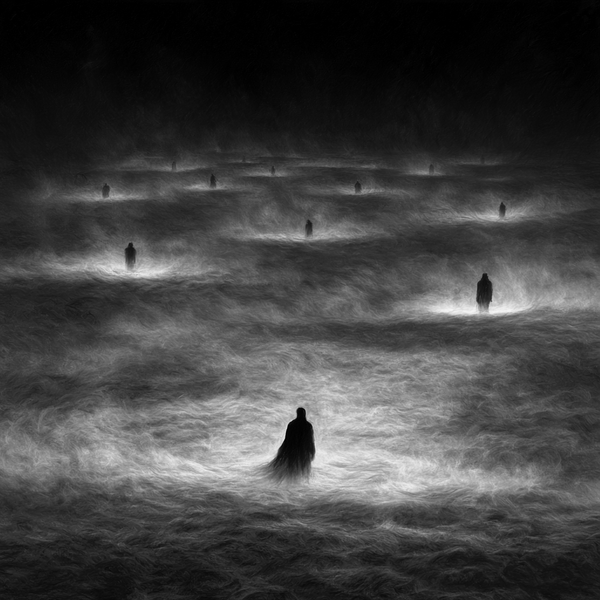
The greatest luxury may be remaining unreachable.
Access was once a privilege. In a world of permanent access, absence may become one.


Accessibility rarely feels like something surrendered. A message arrives, a question appears, an invitation demands a decision, another event becomes worth knowing. Each asks for almost nothing, yet together they create something historically unusual: a life in which the outside world can request entry at almost any moment. The door is never forced open. It simply stops being closed. And once permanent availability becomes normal, protecting a few hours from the world can require more deliberate power than reaching almost any place within it.
Permanent accessibility quietly changes the ownership of time. A message takes seconds to send but can interrupt an hour of thought. A notification occupies almost no space yet can determine what enters consciousness next. The asymmetry is remarkable: another person can spend ten seconds creating a demand on attention that costs its recipient far more to absorb, evaluate, and recover from. Access therefore ceases to be merely a channel of communication. It becomes a mechanism through which other people’s priorities can enter a life without permission.
This produces a strange inversion of status. Abundance usually reduces value, and accessibility is becoming abundant. The scarce condition is increasingly the opposite: uninterrupted thought, unscheduled time, conversations without devices, hours in which no external signal can demand a response. What once looked like isolation can therefore become a form of privilege. Not because connection has lost its value, but because meaningful connection itself requires a mind capable of arriving somewhere whole.
Yet unreachability matters for something deeper than productivity. A person continuously exposed to other people’s requests, reactions, opinions, and expectations receives fewer opportunities to discover what remains when those signals disappear. Attention does not merely determine what gets done; it determines what repeatedly enters consciousness, and therefore what has the opportunity to shape thought. If access to a person is permanently open, the boundary between a self-directed life and an externally directed one can gradually become difficult to locate.
The next frontier of freedom may therefore be selective absence. Technology has given humanity an unprecedented capacity to connect, and abandoning that achievement would solve nothing. The challenge is to become powerful enough to decide when connection serves life and when life must temporarily exist beyond its reach. Freedom in an age of isolation required the ability to connect. Freedom in an age of permanent connection may require the ability to disappear—and return with something that could only have been created while the world was unable to interrupt.
Send it forward if you believe this should reach another self-directed mind.