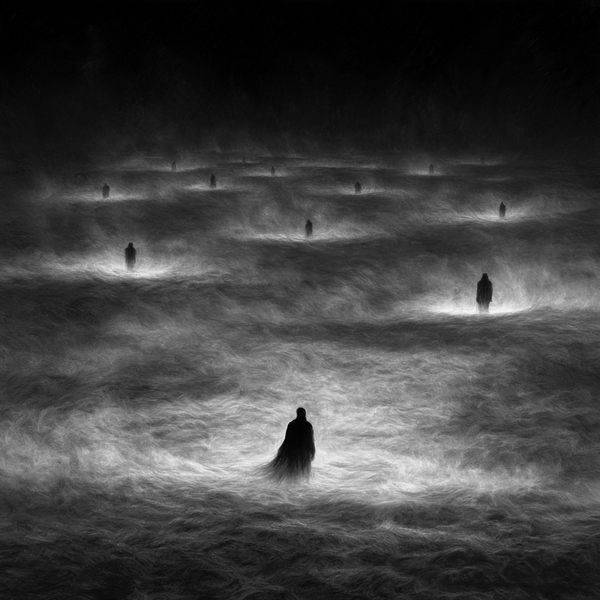
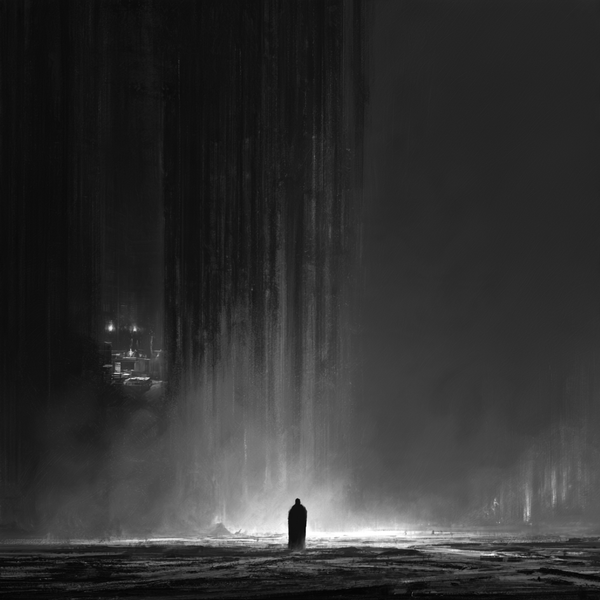
Not all who stand alone are lost—some are free.
Some are not alone because they failed to belong. They are alone because they refused a belonging that required surrender.

The world rarely destroys the rare by excluding them immediately. It often does something more effective: it invites them into rooms where their force must be translated before it can be tolerated. The demand is presented as maturity, cooperation, realism, or patience, but the meaning is simpler: become legible to those who will not become larger in order to understand the individual standing before them. What looks like welcome may become the first stage of reduction.
To stand alone is not automatically noble. Isolation can hide weakness as easily as it can protect strength. But there is a solitude that begins when belonging requires betrayal of the direction forming inside a person. When the group asks for peace at the cost of truth, when acceptance requires the lowering of a private standard, separation becomes something more serious than withdrawal. It becomes self-preservation.
This solitude changes perception because it interrupts the forces that quietly teach a person who to become, what to value, and which future to mistake for their own. Away from the constant pressure to adapt, the individual can begin to distinguish between an inherited want and an original demand. The noise of approval fades. The borrowed role loosens. A different question appears: not what will secure acceptance, but what remains when the need for acceptance no longer decides the answer? That question is often the beginning of freedom.
The strongest individuals are often not antisocial. They are misaligned before they are properly connected. Their isolation is not proof of irrelevance; it may be proof that the surrounding environment has no structure for what they carry. The error is to confuse lack of fit with lack of value. Many things that later change a field, a culture, or a life first appear as incompatibility.
Real belonging does not make the individual smaller in order to make the room stable. It does not confuse unity with sameness or connection with surrender. It recognizes force without domesticating it. But recognition alone is not enough. The right connection does more than allow the individual to remain whole; it increases what that wholeness can do. It turns separate strength into shared direction, and shared direction into a force greater than either side could produce alone.
Not all who stand alone are lost. Some are refusing to become less true for the reward of being included. Some are using silence to become exact. And when they finally meet the few who can stand beside them without reducing them, solitude does not end as return to the crowd. It becomes the beginning of an alignment strong enough to turn isolated forces into a structure capable of changing the world.
Send it forward if you believe this should reach another self-directed mind.