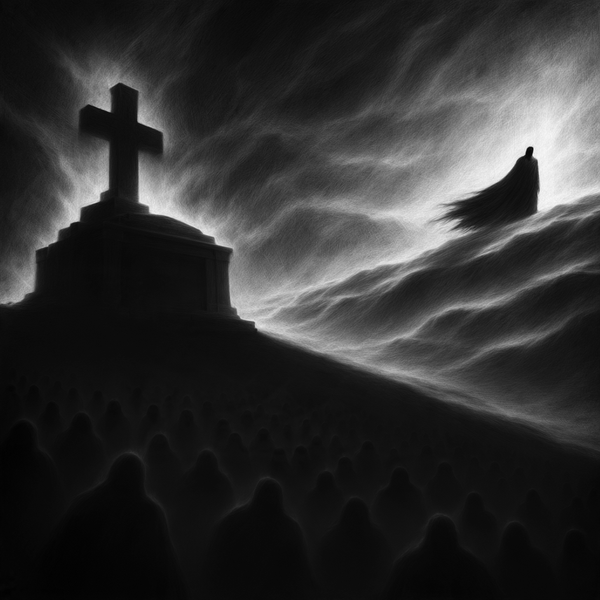
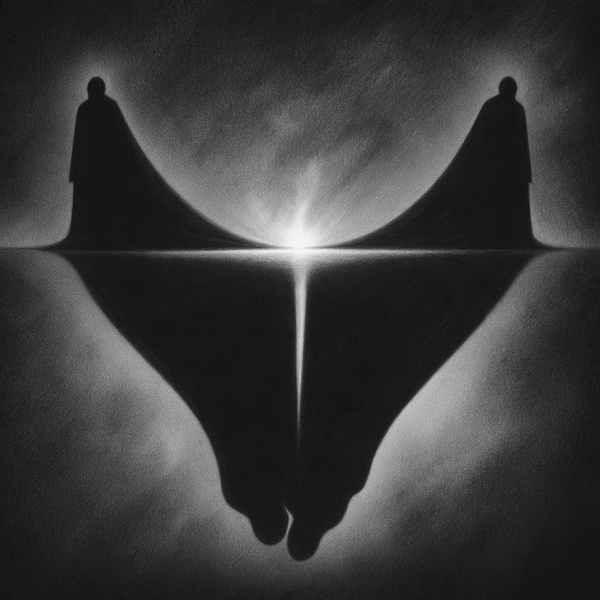
The greatest victories can leave nothing to fight for.
An obstacle can become a purpose. Removing it can leave a life without direction.


A man spends half his life fighting an enemy he believes must be defeated. Every sacrifice has a purpose, every hardship strengthens his determination, and every morning begins with the certainty of what must be done. His relationships, ambitions, and identity gradually organize themselves around the struggle. Eventually, he wins. The enemy disappears, the danger is gone, and the future he fought to secure finally arrives. Yet instead of liberation, he experiences an emptiness he cannot explain. He has achieved everything he wanted, but no longer knows what to want. The victory has ended his suffering without restoring his ability to live beyond it.
Struggle can give extraordinary coherence to human existence. A scientist dedicates decades to solving a problem that others consider impossible. A political dissident organizes an entire life around resisting oppression. A person fighting a serious illness measures each day against the possibility of recovery. These struggles demand sacrifices, but they also establish priorities that ordinary life rarely provides. Decisions become simpler when one objective dominates everything else. Even suffering becomes bearable when it can be understood as the price of something greater. The danger emerges when the struggle ceases to be a means of achieving a purpose and becomes the only remaining source of purpose itself.
The deeper truth is that a person can become dependent on the very obstacle they are determined to overcome. An enemy provides focus. A crisis establishes urgency. A seemingly impossible objective gives every achievement a place within a larger story. Remove the obstacle, and the structure supporting that identity can collapse. The person may even begin searching for new conflicts, not because conflict is desirable, but because peace demands something more difficult: the freedom to decide what matters without an enemy making that decision for them. The greatest victory can therefore reveal that the struggle was never merely something to escape. It had become something the person no longer knew how to exist without.
This does not diminish the value of overcoming injustice, suffering, or limitation. Some battles must be fought precisely because their victories make a better existence possible. But the purpose of defeating an obstacle cannot be reduced to the act of defeating it. A movement that achieves freedom must discover what freedom will enable it to create. A person who survives illness must be allowed to become more than a survivor. An individual who reaches an extraordinary goal must remain capable of imagining ambitions beyond it. The challenge is to build an identity large enough to contain both the struggle and the life that follows. Otherwise, victory merely removes the struggle that held that identity together.
The greatest triumph is not to defeat an enemy, but to become someone whose purpose no longer depends on having one. Humanity's possibilities extend far beyond surviving threats, overcoming obstacles, or winning battles inherited from the past. Every conquered limitation opens territory that could not previously be explored. Every victory creates the possibility of choosing a new direction rather than accepting one imposed by necessity. The end of a struggle should never become the end of ambition. For the highest achievement is not to spend an entire life fighting for a future, but to reach that future and discover that the greatest reasons to live have only just begun.
Send it forward if you believe this should reach another self-directed mind.