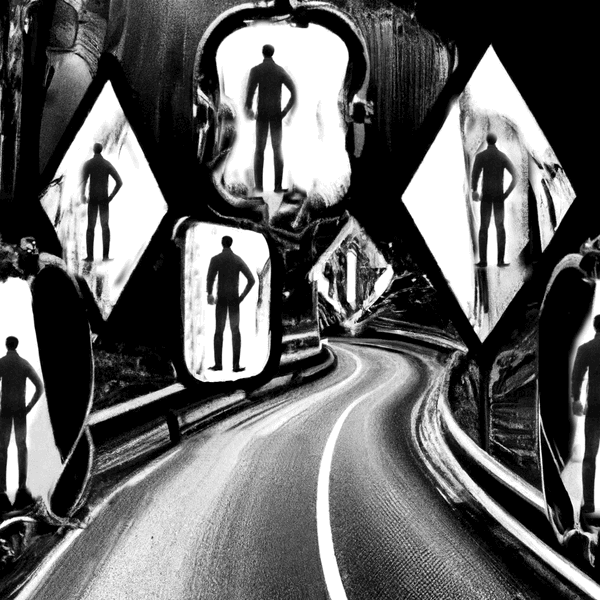
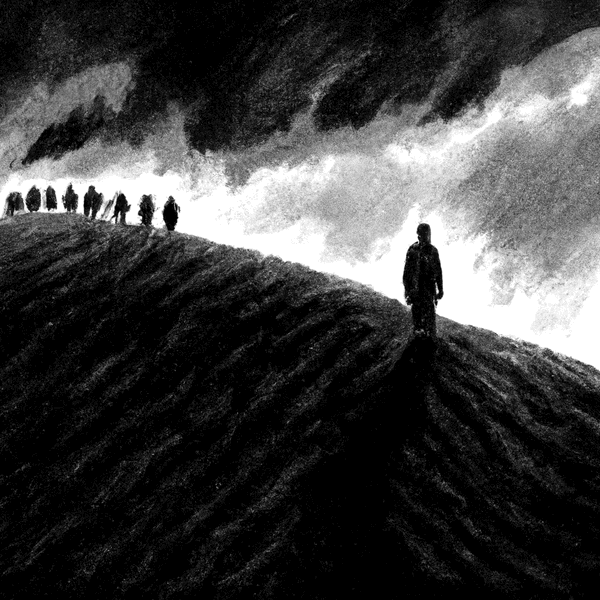
Propaganda succeeds when the lie becomes easier than the truth.
Lies win when they are easier than reality. Truth survives only in those willing to carry its weight.

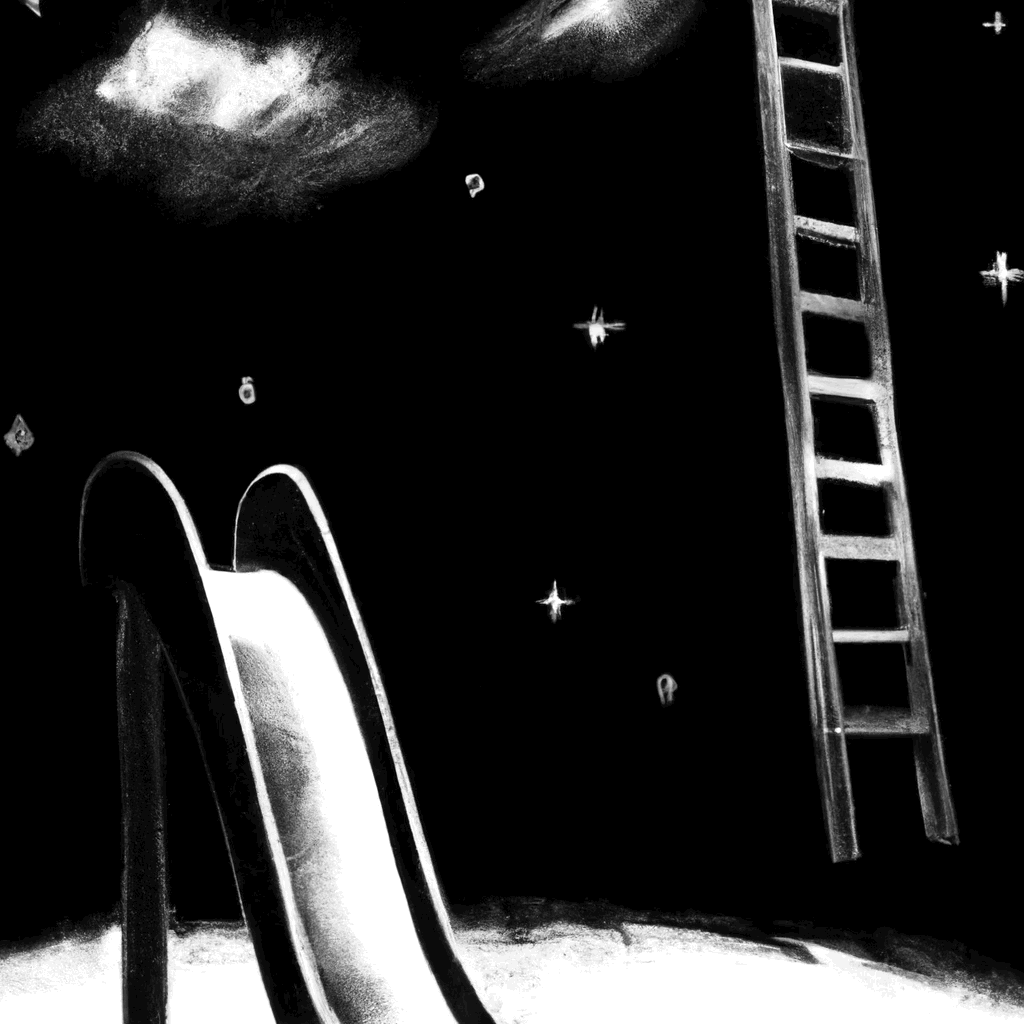
Propaganda does not prevail by force alone; it prevails by convenience. A falsehood need not be more convincing than reality—it only needs to demand less effort from those who adopt it. The human mind, driven by efficiency, selects the path of least resistance. When a lie is structured to simplify complexity, to eliminate ambiguity, and to shield from conflict, it becomes more livable than the truth. At that moment, persuasion ends and assimilation begins.
The danger is not that people are misled but that they stop seeking. A manufactured narrative removes the burden of questioning, while truth requires constant engagement, discomfort, and friction against one’s surroundings. Most individuals prefer the certainty of alignment over the isolation of doubt. What is presented as shared understanding becomes a shortcut to belonging, and in that shortcut the ability to distinguish between what is and what is merely declared disappears.
Systems recognize this mechanism and weaponize it. They do not need to silence dissent; they only need to design an environment where resistance requires greater cost than conformity. Laws, codes, and cultural scripts operate less as constraints and more as incentives, rewarding those who adapt and punishing those who confront. Under such conditions, truth becomes impractical. It is not crushed but outcompeted.
The few who resist this current encounter another challenge: isolation. To reject convenient falsehoods is to step outside the tribe, to live without the guarantees of shared acceptance. This position demands resilience and continuous self-construction. It requires building a framework of values not inherited but earned, tested against reality rather than dictated by it. Survival in this position is not a matter of rejecting systems entirely but of transcending them—using them as scaffolding without mistaking them for foundations.
The trajectory of societies follows this struggle. When individuals collectively surrender to convenience, systems harden, and mediocrity becomes institutionalized. Innovation is tolerated only when it serves stability. But when individuals reclaim the burden of truth—when they accept conflict, ambiguity, and the discomfort of independence—they expose the fragility of the structures around them. History records such figures not as products of their age but as forces that reshaped it.
The question is not whether lies will continue to dominate—they will, for they are efficient. The question is whether there are enough willing to carry the heavier weight of truth, to endure the discomfort it demands, and to act as centers of gravity strong enough to realign the world around them. For progress does not emerge from the comfortable majority but from the relentless few who refuse to let convenience decide reality.
In the end, propaganda succeeds not because the lie is believed, but because it is easier. The task of those who resist is to ensure that ease never substitutes for truth, that comfort never displaces reality, and that the cost of questioning is borne by those who cannot afford to remain silent. Only then does the cycle break, and only then does the individual cease to be processed by systems and instead begin to shape them.